
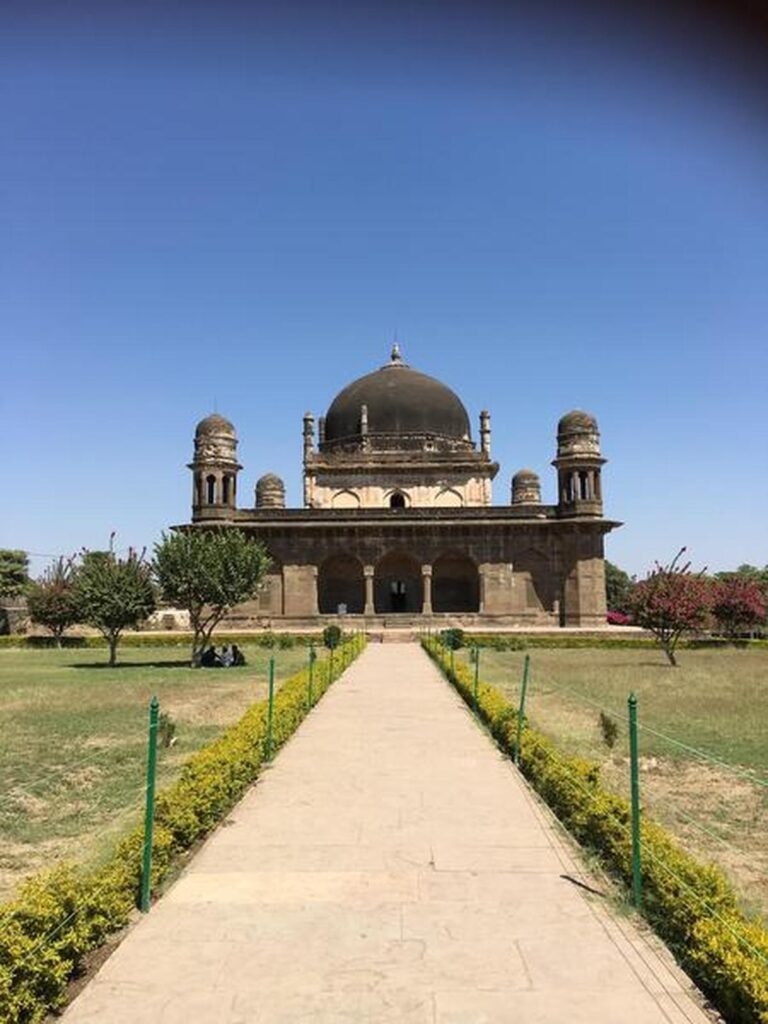
Once a thriving Mughal city celebrated as the “Gateway to the Deccan,” Burhanpur today feels like a town paused in time, where history quietly coexists with everyday life. Tucked away in southern Madhya Pradesh on the banks of the Tapti River, the city no longer bustles with imperial grandeur, yet its past remains strikingly visible in its streets, structures, and rhythm.
Unlike most historic walled cities in India, where fortifications have crumbled or disappeared under modern development, Burhanpur’s city walls still stand, remarkably intact, along with many of its gateways. Entering the city feels like stepping through layers of history. Driving through the Shanwara Gate, Itwara Gate, and Shikarpura Gate offers a tangible sense of how traders, soldiers, and travelers once passed through these very entrances centuries ago. Each gate, though weathered by time, continues to mark an important threshold between the old city and its surroundings.
Beyond these, other historic gateways—Lohar Mandi Gate, Dilli Gate, Sindhipura Gate, Silampura Gate, and Rajpura Gate—dot the city’s perimeter, each named after the communities, trades, or routes they once served. Together, they form a living map of Burhanpur’s commercial and cultural past, when the city was a crucial link between North India and the Deccan plateau. Walking or driving past these gates today, one senses a slower pace of life, where modern traffic flows beneath centuries-old arches, and the echoes of Mughal-era prosperity linger in stone and brick, quietly reminding visitors of Burhanpur’s former glory.